CESVI presents the 21st Italian edition of the Global Hunger Index (GHI): Hunger levels are alarming in 8 countries and serious in 36.
After nearly two decades of progress, global hunger is once again on the rise compared with 2018. In Somalia, the country with the highest hunger score, 1.9 million children are at risk of acute malnutrition, while a new El Niño threatens to bring devastating floods.
«Hunger is not merely a consequence of instability, it is also a powerful multiplier of its effects» says Stefano Piziali, CESVI General Manager.
In 2025, 645 million people – almost the entire population of Europe – suffered from hunger. Of these, 147.4 million lived in 19 conflict-affected countries and 87.5 million in 16 countries hit by extreme weather events[1]. And the numbers could rise further: a new El Niño, expected to be among the strongest ever recorded, could bring another 49 million people into acute hunger by the end of 2027[2].
These are among the findings of the 2026 Global Hunger Index (GHI), one of the leading international reports measuring hunger worldwide. The Italian edition is published by CESVI, while the report is produced by Welthungerhilfe (WHH), the Institute for International Law of Peace and Armed Conflict (IFHV), and Helvetas.
Children are paying the highest price: in 2025, 35.5 million children[3] suffered from acute malnutrition, nearly 10 million of them in its most severe form. In the same year, for the first time, famine was confirmed in two contexts simultaneously: the Gaza Strip and Sudan. In 2026, the risk of famine also affects three countries: Somalia, South Sudan, and Sudan.
A WORLD AT WAR, A CLIMATE IN CRISIS. In 2025, 65 armed conflicts were recorded, the highest number since the Second World War, while ACLED documented more than 204,000 incidents of violence over 12 months, resulting in over 240,000 fatalities[4].
Meanwhile, droughts, floods, and storms are occurring with increasing frequency. Last year, 358 disasters linked to natural hazards, including earthquakes, affected more than 110 million people[5].
This year’s GHI report portrays an increasingly unstable world. In 2026, the United Nations Office for the Coordination of Humanitarian Affairs has already recorded 64 emergencies linked to extreme weather events[6]. El Niño, expected to last until at least early 2027, threatens to hit some of the world’s most vulnerable countries, bringing drought to Southern Africa, the Sahel, and Asia, and floods to the Horn of Africa.
These challenges are compounded by the consequences of the war involving the United States, Israel, and Iran. The closure of the Strait of Hormuz, through which approximately one-third of seaborne fertiliser trade passes, could push another 45 million people into acute hunger.
After nearly two decades of substantial improvements, global hunger has worsened compared to 2018, against a backdrop of multiple overlapping crises. The global GHI score for 2026 stands at 18.1, indicating a moderate level of hunger, but masking a deeply concerning situation at regional and national levels.
According to the report, hunger levels are alarming in 8 countries – Burundi, Chad, the Democratic Republic of Congo, Madagascar, Somalia, South Sudan, Sudan, and Yemen – and serious in 36 countries; in 32 countries, hunger levels are higher than in 2018.
Armed conflicts are the most significant factor. In countries affected by protracted conflict, the median GHI score now stands at 22.1, higher than the score recorded in peaceful countries in 2000 (15.2). Nearly a generation of progress in the fight against hunger has been lost.
«War and climate-related crises are no longer separate emergencies: in most food crises, they overlap and reinforce one another – says Stefano Piziali, CESVI General Manager – Hunger is not merely a consequence of instability, it is also a powerful multiplier of its effects. This is why this year’s GHI sends a clear message: there is no security without food security. Cutting aid precisely where hunger is most severe means laying the groundwork for tomorrow’s crises».
SOMALIA: WHERE ALL CRISES CONVERGE. Somalia has the highest GHI score in 2026 (47.0, classified as alarming), with more than one in two people undernourished and one in ten children dying before their fifth birthday.
The country faces all the interconnected drivers of hunger highlighted in the report: drought, which prompted the government to declare a national emergency; the conflict with Al-Shabaab; rising prices driven by the crisis in the Middle East; and aid cuts that have forced more than 500 health and nutrition facilities to close[7].
In 2026, acute hunger increased by 43%, and 1.92 million children are expected to suffer from or be at risk of acute malnutrition by June 2027[8].
Now, with the arrival of El Niño, months of drought could be followed by devastating floods, potentially affecting between 2.5 and 3.5 million people[9]. Yet Somalia also demonstrates that progress is possible: in 2026, its GHI score fell below the extremely alarming threshold for the first time among the reference years, improving from 64.4 in 2000.
«Somalia brings together all the drivers of hunger described in the report: drought, conflict, rising prices fueled by a war far away, and shrinking aid precisely where it is needed most – Piziali explains – Now, after months without enough water, the country risks being overwhelmed by it, because of floods. This is why we are working both to treat malnourished children and strengthen community preparedness: acting early costs less, in both financial and human terms, than responding once an emergency has escalated. In Hobyo and Beletweyne, we plan to provide assistance to more than 8,500 children suffering from acute malnutrition and work with communities to identify early warning signs of droughts and floods».
SUDAN, AFGHANISTAN AND ETHIOPIA. The 2026 GHI also highlights critical conditions in Sudan, Afghanistan, and Ethiopia.
In Sudan, after more than three years of war, nearly 19.5 million people – two in five – face severe food insecurity[10], while 4.2 million children are expected to suffer from acute malnutrition in 2026[11]. The conflict has made it impossible even to calculate the country’s GHI score, and Sudan has therefore been provisionally classified as having an alarming level of hunger.
In Afghanistan, progress has stalled: 42% of children under five are affected by stunting, while 3.7 million children were suffering from acute malnutrition in August[12].
In Ethiopia, amid conflict in Amhara, a 60% year-on-year increase in maize prices, and the risk of flooding in the southeast, it was not even possible to estimate the number of people experiencing acute hunger in 2025.
NO SECURITY WITHOUT FOOD SECURITY: REGIONAL PERSPECTIVES. The 2026 GHI brings together perspectives from different regions of the world, showing how hunger and insecurity reinforce one another through different dynamics.
Sub-Saharan Africa. The region continues to record the highest level of hunger worldwide and has experienced a reversal of earlier progress. Its 2026 GHI score of 27.5, classified as serious, is higher than in 2018, marking the first increase between reference years.
Latin America and the Caribbean. Countries across the region have continued to make progress in reducing hunger. Although the region produces enough food to feed its population, millions of people remain food insecure because of inequality and exclusion. In Guatemala, 44.6% of children under five are affected by stunting, with even higher rates among Indigenous and rural communities.
Western Asia and North Africa. After years of improvement, hunger is once again increasing across the region. With approximately 480 cubic metres of freshwater available per person annually – below the threshold of absolute water scarcity – the region depends heavily on food and energy imports. Its 2026 GHI score of 12.5, classified as moderate, has risen from 11.9 in 2018, reversing a steady decline from 18.1 in 2000.
East and Southeast Asia. The region has achieved a substantial reduction in hunger since 2000, although progress has slowed sharply since 2018. Its GHI score stands at 8.1 in 2026, having more than halved between 2000 and 2018 before remaining broadly stable.
PROGRESS IS POSSIBLE, BUT INCREASINGLY DIFFICULT TO MEASURE. The report also identifies encouraging signs. Since 2018, 31 countries have reduced their GHI scores by at least 10%, while child mortality rates continue to decline. The number of people experiencing catastrophic levels of hunger[13] has also fallen in 2026, from 1.4 million to approximately 327,000, thanks to reduced fighting and increased humanitarian assistance in Gaza and Sudan.
However, these gains remain fragile and are becoming increasingly difficult to verify. Aid cuts – with humanitarian funding projected to decline by 40% between 2024 and 2026[14] – are also undermining the systems used to monitor hunger: for 14 countries, including Sudan, South Sudan, and Yemen, insufficient data prevent the calculation of a complete GHI score. In 2025, at least five countries lacked acute hunger data because of funding shortages. According to estimates cited in the report, a sharp reduction in development assistance could result in an additional 5.4 million deaths among children under five.
«Twenty years of progress show that hunger can be reduced, and Somalia’s move out of the most severe category confirms this – Piziali concludes – But today, we risk losing sight of just how much the situation is deteriorating: funding cuts are shutting down monitoring systems, too. Hunger that goes unmeasured is hunger that goes unanswered. Missing data, from Sudan to Ethiopia, do not mean these countries are becoming more stable: they mean we are increasingly unable to see what is happening there».
RECOMMENDATIONS. The 2026 GHI calls for integrating food security into security policies, investing in resilient food systems, halting aid cuts and providing adequate funding for monitoring and early warning systems, strengthening preventive diplomacy, and holding accountable those who use starvation as a weapon of war.
To download the 2026 Global Hunger Index: full report and executive summary.
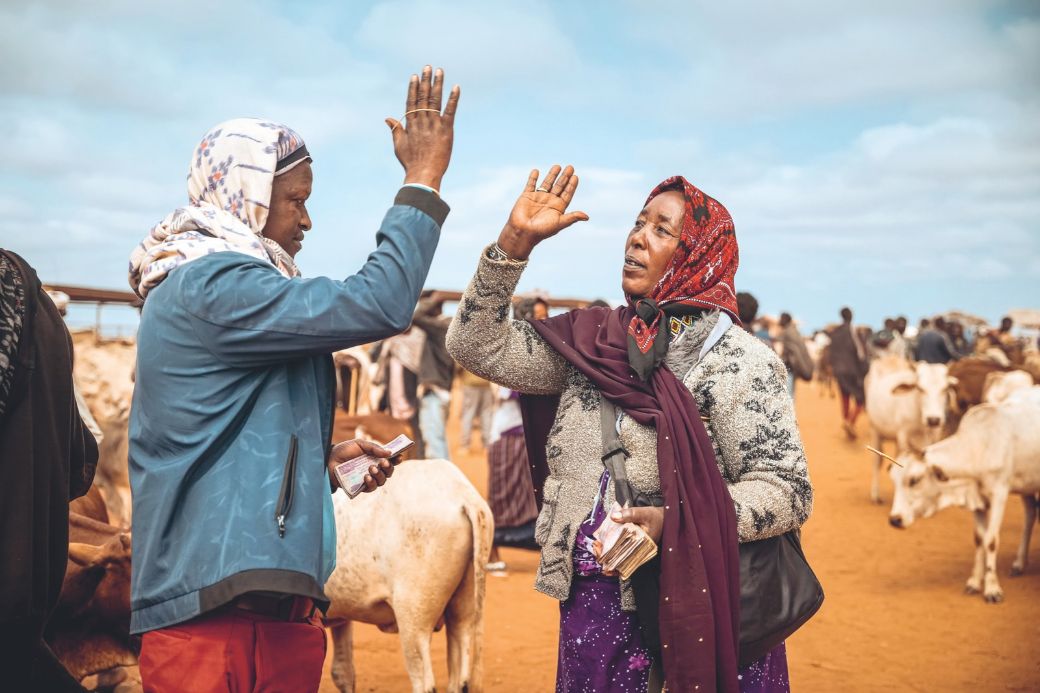
Photo by Mahad Usman/Helvetas


