A new wave of violence shook Lebanon in the last 48 hours, when a series of missile and drone attacks in northern Israel triggered a heavy response from Tel Aviv. According to the latest reports, the Israeli army is entering southern Lebanon. Last night, bombing raids hit the southern districts of Beirut, the south of the country and the Bekaa Valley hard, causing more than 50 deaths and 150 injuries according to local authorities.
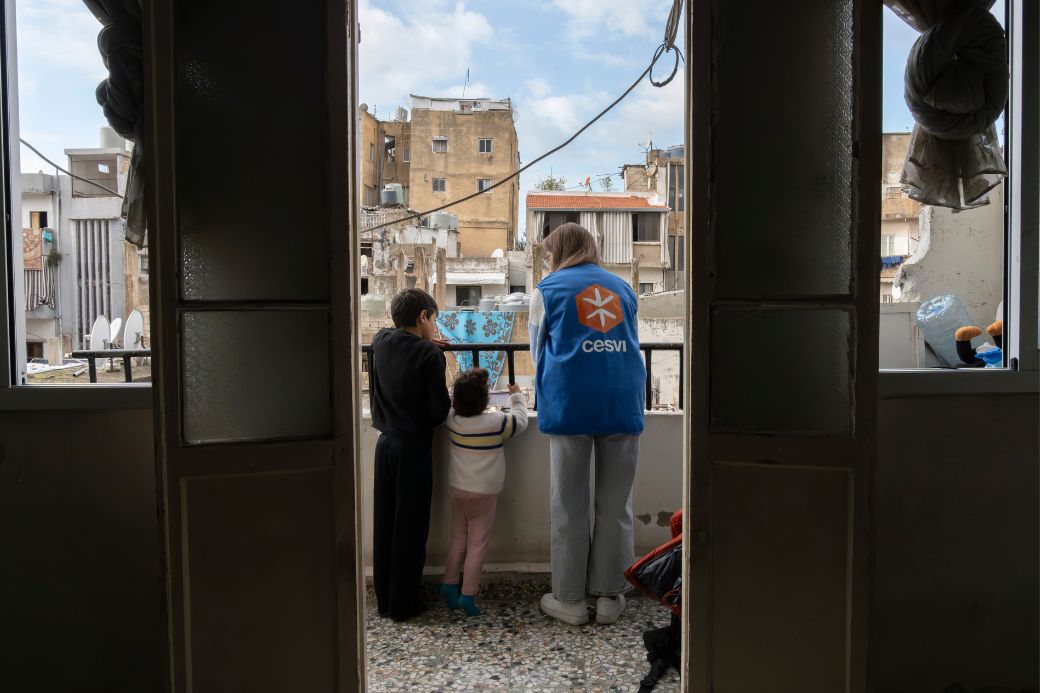
In relation to these events, we confirm that all CESVI field staff are safe and well, and are closely monitoring the evolving situation to ensure continued support to the affected communities,through psychosocial support aimed in particular at children and families and to provide basic necessities to the displaced population.
“Thousands of people have fled the Dahieh area and southern cities such as Tyre, clogging the motorways northwards in a desperate escape that has led dozens of schools in the capital to open their doors to shelter displaced families. For the moment, there are around 28,000 displaced people, approximately 5,000 families. The Lebanese Government has opened 168 shelters for those displaced, and needs are rising: water, food, hygiene supplies, winter kits, and above all the population is experiencing a new trauma. Families urgently require psychosocial support to cope with the ordeal they are facing,” said CESVI Head of Mission Federico Patacconi.
This latest escalation represents yet another dramatic violation of the ceasefire signed in November 2024. In the first three months of 2025 alone, over 2,000 violations of Lebanese sovereignty were documented, fuelling unbearable psychological pressure on a population that still bears the scars of the previous conflict. There is widespread fear that entire areas of the country may once again become uninhabitable, just as Lebanon faces 2026 in a state of extreme economic and social fragility.
Today, nearly three million people, including Lebanese citizens and Syrian refugees, depend on humanitarian assistance. The economic crisis, worsened by hyperinflation and the collapse of public services, has drastically reduced families’ purchasing power, often forcing them to cut meals or withdraw their children from school. Children are the most vulnerable: over 70% of caregivers report that their children suffer from anxiety or depression, while the risks of child labour and early marriage are rising exponentially.
In this context of emergency, our commitment remains essential to support the hardest-hit communities through an integrated approach combining protection and development. We work to make public schools safe and inclusive spaces, refurbishing damaged buildings and installing solar panels to counteract ongoing power cuts. Alongside educational and psychological support for children, we strengthen the local economic fabric by supporting small businesses and agricultural cooperatives, and by providing vocational training pathways for young people and women. Our aim is to transform immediate assistance into long-term resilience, convinced that protecting education today is the only way to rebuild Lebanon’s future.