Three years into the conflict, Sudan is facing one of the world’s worst humanitarian crises. Today, nearly two in three people – over 33 million – need humanitarian assistance, whilst more than half of the country’s children are growing up in conditions of extreme vulnerability.
The war has devastated infrastructure, essential services and entire communities. Millions of people have been forced to flee their homes: this is the world’s largest displacement crisis, with over 9 million internally displaced people and millions of refugees in neighbouring countries. Violence against civilians remains widespread and brutal, whilst hunger, malnutrition and epidemics are further exacerbating an already dire situation.
In this context, the needs are enormous and constant: access to food, medical care, safe water and protection. But alongside these material needs, a less visible crisis is also becoming increasingly apparent, one characterised by deep trauma and a loss of security.
“Sudan is a deeply scarred country: what we see is a fragile balance, where normality is only apparent and it takes very little to realise just how much people have lost,” says Francesca Matarazzi, CESVI’s Emergency Coordinator.
CESVI’s response: protection, health and support for communities
CESVI resumed its operations in Sudan in 2024 in response to the escalating crisis and is now active in the Red Sea State, where the number of displaced people has risen, putting pressure on already fragile services.
Here, it takes an integrated approach that prioritises the protection of the most vulnerable people – particularly women and children – by combining healthcare services, psychosocial support and water and sanitation initiatives.
In the health centres supported by CESVI, ‘protection safe corners’ are established – secure spaces where people can receive care, psychological support and protection services in a confidential and dignified manner. At the same time, community protection networks and awareness-raising programmes are set up to prevent violence and abuse.
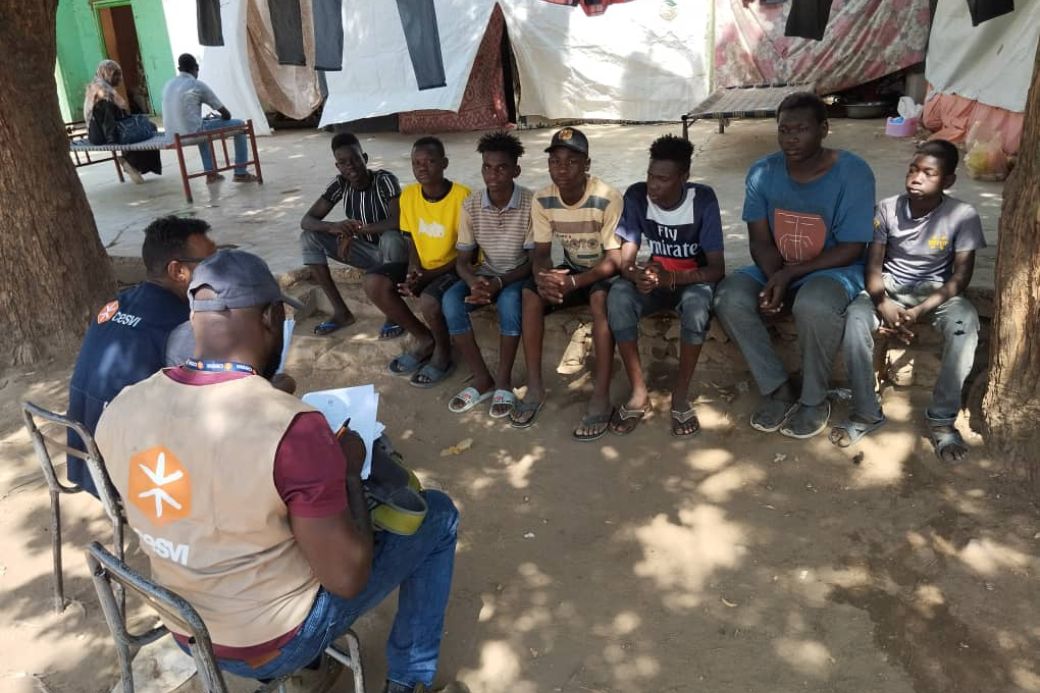
Attention is paid to mental wellbeing: through individual and group activities, CESVI offers psychosocial support to those who have experienced trauma, helping to rebuild social connections and resilience.
“What clearly emerges is widespread suffering, often unspoken,” explains Matarazzi. “Many people carry with them experiences of violence and loss, and this weighs particularly heavily on women and children, who find in these support spaces a rare place where they can feel safe and open up.”
Children are among those hardest hit by the crisis: millions of them have no access to education and are at risk of exploitation, violence and psychological distress. The loss of familiar landmarks and prolonged instability are having a profound impact on their development.
“Many children are showing signs of severe distress and face a daily life marked by uncertainty and fear,” adds Matarazzi.
Continuing to take action to save lives and restore dignity
Despite enormous operational challenges, CESVI continues to work on the ground to ensure access to essential services and protection for the most vulnerable communities. In a context marked by violence, displacement and deprivation, every intervention represents a concrete step towards restoring safety and dignity to those affected.
Cover photo © Eugene Ikua/Concern Worldwide